
Natural and Logical Consequences


Natural and logical consequences are key to raising responsible, respectful, independent children. Unlike punishment, consequences will stop a behaviour permanently. Punishment is effective in stopping a behaviour, but only temporarily, and punishment leads to a child feeling resentful, rebellious and wanting to get revenge. Then the whole reason for the punishment is lost and the focus of the child shifts to ways of getting back, rather than to what is trying to be taught by you giving a punishment in the first place.

What are consequences? Natural consequences are consequences that occur naturally without any intervention and are life’s greatest teacher. The natural consequence of not wearing a coat in cold weather is being cold. For not eating breakfast, it is being hungry until snack time. Of course, some natural consequences, like getting hit by a car for running out into the road is not one that you want to child to experience. As long as the natural consequence does not put the child or anyone else in any danger, then it is acceptable. The child’s safety is paramount!

Logical consequences are those that are imposed and are created by you. However, for a consequence to truly be a consequence it must be REASONABLE, RELATED and RESPECTFUL. If one of these three R’s is missing then the consequence is actually a punishment, so it is important that your consequence not be a disguised punishment. Going to bed for not eating dinner is a punishment as it is not related, reasonable nor respectful. Losing one’s computer privileges for not doing chores is not related. However, losing one’s computer privileges for a day for abuse the computer time limit is related, reasonable and respectful and is a logical consequence. Below are a few logical consequences to some everyday situations. Consequences are meant to teach and you should always leave space for the child to try again. Therefore, the consequence for a first “infraction” is only one day (or a short period of time) and the time increases if the behaviour is repeated.

                BEHAVIOUR                                                                             LOGICAL CONSEQUENCE

Not putting gas in the car after using it                                               Lose the privilege of using the car

Not turning off the computer when time is up                                    Lose computer privileges for the next day

Not cleaning up after playing                                                              Lose those toys for a day

Not putting bike away after riding it                                                   Can’t use bike the next day

Child spills                                                                                     Child cleans up spill

Remember, and sometimes the hardest thing to do, is to remain calm and use a friendly tone when imposing a consequence on your child. This keeps interactions respectful. The last thing to remember is that consequences do not work with children under three as they have not yet reached the age of reason before three.
Reasonable

Related

Respectful

Mutual Respect

What is respect?

Being respected means being valued as a worthwhile human being. It is being treated with dignity regardless of human differences such as age, gender, race and even knowledge and skill.

There are two parts to mutual respect:

  1. Mutuality is a two-way street (I respect you and you respect me.). For that to happened we must each also respect ourselves.
  2. Equality is the basis for mutual respect. Equality here does not mean sameness but in the fact that we are human beings, belonging to the human family. We all need to be treated with dignity and respect. It means we have value or personal worth simply because we are human beings.

How mutual respect works in an adult/child relationship:

Many of us were raised with the idea that children must respect adults, while children were often treated with disrespect. We were taught to obey and this was enforced with reward and punishment. Children were controlled by the adults in their lives. Under this system, children learned to have others think for them, to avoid mistakes and to be submissive to an external authority.

Mutual respect between adults and children requires us to shift out beliefs and techniques of parenting. While the roles of parent and child are different, the individuals involved are of equal value as human beings. When parents are providing for, nurturing and teaching children in a non-punitive way, children come to believe that they are worthwhile, that they have abilities and that others believe in them and trust them. Parents can most effectively help children to learn to become independent, contributing individuals with strong internal motivation by doing the following:

  • Encouraging and valuing children’s contributions, ideas and efforts.
    • Saying “Thank you for helping/sharing. I appreciate it.”
  • Accepting and acknowledging children’s feelings as valid, legitimate and real.
    • Saying “You’re really sad that you can’t play longer at your friend’s house.”
  • Accepting mistakes as opportunities to learn.
    • Saying “What did you learn from this?” – Also see last point.
  • Finding opportunities for children to makes choices and decisions.
    • Give opportunities to make age appropriate choices early.
  • Giving assistance in, and opportunity for, critical thinking and problem solving.
    • Working trough problems with your child initially to teach the skills and then letting your child do it on his/her own once s/he has the skills
  • Sharing affection and fun with children.
    • Lots of hugs and playing with your children.
  • Remember that example is the most powerful teacher.
    • No comment needed here!
IMG_0143

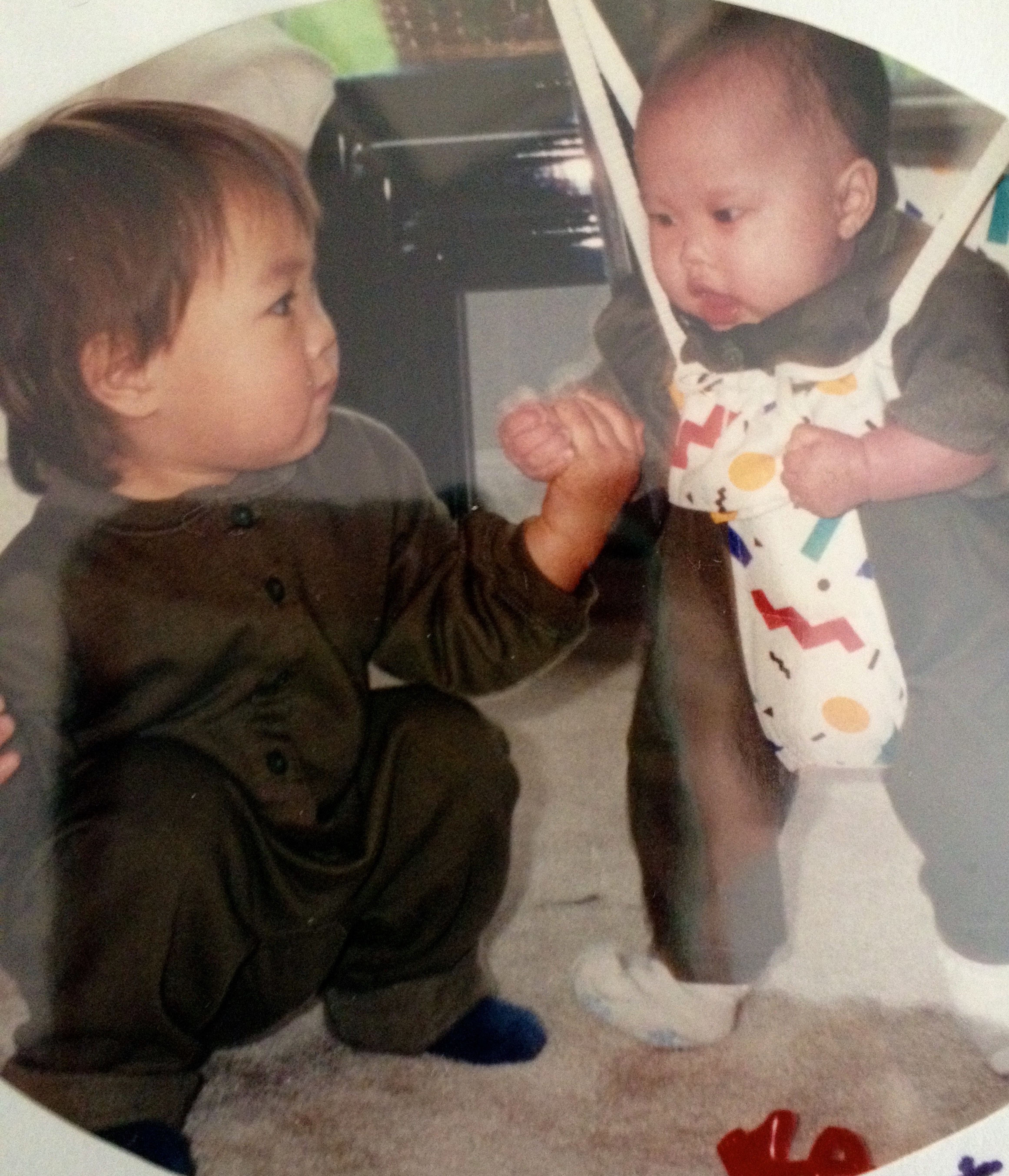
Mutual respect begins early!

Adapted from an article by E. Quiring and B. Johnson.