ANGER

We had a very interesting discussion last night at the parenting class about anger. We were all in agreement that anger was an emotion that was just as valid to express as any other. It’s just not all that comfortable for us to express or be in the presence of as most of us were brought up being told not to be mad. We grew up believing that anger was “bad”.

Now we are teaching our children that anger is okay and needs to be expressed. Anger, as one parent pointed out, was there to tell us that something was not right and that this something needs attention. This is just the same as anxiety; it’s there so that we know how to react if we see a speeding car coming toward us as we are crossing the road. But there is a useful anger and there is a useless anger and we need to teach our children the difference and what to do in the presence of the useless anger.

The anger that is useful is the anger that pushes us forward to do something about the circumstance that is causing the anger. It fuels us, gives us energy and helps us move forward. When anger turns to rage, then it is useless. It does not allow us to get to any kind of resolution about the issue at hand. In a child, this shows up as a tantrum. When the child is enraged there is not much that can be done other than to let them weather the storm.

Generally, the child gets scared when his/her anger gets this big. The child does not like this out-of-control feeling. After the storm you can talk about what happened and about what the child was feeling. Use this as an opportunity to teach about useless anger and that when we are experiencing useless anger, we need to go take care of ourselves; walk away, cool off and then go back to the issue when the raging storm has passed. Rage can be very hurtful to others as well as ourselves. This is when we are operating on pure animal instinct – in full fight mode. We need to vent this rage in a safe place and appropriate way.

What are your thoughts? How do you deal with the useless anger at your home?

Teens and Letting Go!

Letting go has to be one of the most difficult things to do as a parent.  As we watch our kids grow and become more independent our first reaction is to try and hold on tighter.  Unfortunately, this is the last thing that they want or need and only causes our kids to try to move even further away from us.  The reality is teens are ready for independence a lot sooner that we, the parents, are ready to let them go.

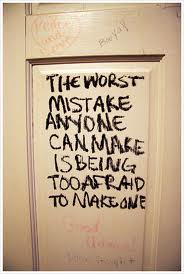
During the teen years our job as parents is to prepare our kids for the adult world – prepare them to be able to live lives independent of us.  We have to let them gain the experience they need for independent living.  They need to make their own mistakes and suffer the consequences of poor decisions, as long as it is not dangerous, life-threathening or immoral.

During the first 12 years, we have taught our children how to behave. We have given them moral guidelines to follow.  We have instilled values and shaped who they are.  We have supported them, taught them right from wrong, dried their tears and bandaged their hurts.  We have modelled how to treat others and how to take care of and speak up for themselves.  Now, in the following five years, we need to let them practice what they have learned yet remain a constant support.  We continue to encourage them, support them, listen to them and dry their tears while remaining non-judgemental.  We offer our opinion but don’t insist that this become their way of thinking.  We encourage open communication by listening without judging and by not lecturing.  It is a time when we trust that we have done our job as parents in the first 12 years and now we watch this person unfold and blossom before our eyes.

Rules and curfews are no longer ENFORCED but are negotiated.  Consequences are a part of life so we make sure that our teens experience the consequences of their actions: “You can drive the car as long as you put gas in it.”or “Dinner is served at 6:00 and if you are going to be late, call or else dinner will be put away.”

In a few short years, our teens may be away at university or working and living on their own.  They will have to know how to take care of themselves.  Our gift to them is to give them the opportunity to learn and practice these skills while still living in the caring, supportive environment of home.

Teens and Attachment

Sometimes our teen’s behaviour looks very little like an attachment behaviour and at those time we wonder if we really want to be any closer to them!!  They are belligerent, mouthy, sassy, rude and foul tempered.  Is this really all about hormones?  I think not.

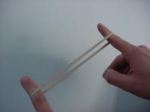
Teens and toddlers have a lot in common; they are both trying to identify themselves and become independent.  Remember when your toddler used to play in a room away from you?   S/he would come back to the room that you were in and check to make sure you were still there.   Your child was actually trying out independence by being apart from you and then coming back when s/he needed reassurance.  A teen is doing the exact same thing by pushing you away when s/he wants independence and then reconnecting for reassurance, comforting or acknowledgement.  An elastic band best describes this attachment and separation process for an adolescent.

Developmentally, teens are in the process of learning to live independent of their parents.    Our role as parents is to encourage and support our children while they are doing this.  We encourage good decisions and choices that we see them making; “You were really taking care of yourself when you decided not to go to that party the other night – the one that got out of control.”  We also guide and help with problem solving; “I see that its’t working out for you.  Would you like us to look at this and see if together we can come up with some solutions for you?”  If they say, “No.” then reply with, “I’m here if you change your mind.”

A good book on talking to teens: How to Talk so Teens Will Listen and How to Listen so Teens Will Talk  by Elaine Mazlish and Adele Faber

Mistakes

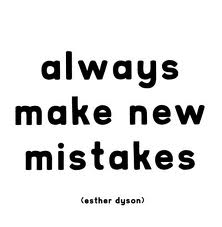
It’s 2012, a new year, a new start and many good intentions.  If I can suggest one resolution for all families to make this year it would be this: Make this the year when you truly embrace the saying “Mistakes are for learning.”  Model this for your children by saying, “Oh, I did this wrong.  Let’s see if I can figure out how to do it.”  Don’t berate yourself for making a mistake, take it in stride.  Show that mistakes mean that you are on your way to learning something new.

The outcome for your child is that he may start to let go of the need to always do it right and will start to be able to accept that mistakes are a normal process.  This releases your child of the huge burden of thinking that anything that’s not always right is not good enough.  So when your child is upset with him/herself because s/he made a mistake just say, “I see you’re upset that you didn’t get this all right.  You would really like to be able to do it better.”  You’re acknowledging the feelings without any judgement that making mistakes is not okay.

This leads to a more self-confident child, one who accepts him/herself for who s/he is.  Thomas Edison said “I have not failed.  I have just found 10,000 ways that won’t work.”  Thanks for that Thomas!

T’is the Season!

The holiday season is a time when families, relatives and friends gather to celebrate together, some from different parts of the world.  It can be an exhausting time as you try to fit it all into your already hectic schedule.

Ten tips for keeping your sanity during the holiday season:

  1. P, P and P.  Prepare, plan ahead and pace yourself.
  2. Keep plans simple: one or two activities per week.  It’s about QUALITY NOT QUANTITY. Make a family “downtime” part of the plans.  This might be the time to watch a holiday movie at home.
  3. Include everyone in the preparations and planning of activities.  Use family meetings as a way of enlisting everyone’s help, yes, even your pre-schooler’s.
  4. Stick to the regular routine as much as possible i.e. nap times, meal times, etc.
  5. Keep the little ones nourished to avoid meltdowns.  We often get so caught up in what we’re doing that we overlook meals and snacks.  Keep snacks healthy as the season provides lots of other opportunities for treats.
  6. Having out-of-town guests?  Have kids decide who will have to give up their room to the guest (if you don’t have a guest room) and have the kids get the guest room ready (tidy, put out towels, strip the bed, etc.).
  7. Get out of the house.  Go for walking tours together to see decorated houses or store fronts or take in some free events in the neighbourhood or the city.
  8. Gift giving:  Keep it simple (tip #2, QUALITY NOT QUANTITY).  Model the gift of giving to those less fortunate than us: Look online or in the local newspaper to find a charitable organization that the family decides to contribute to (Xmas hamper, food bank, toy drives etc.).
  9. Accept a less than perfect contribution from your pre-schooler – remember you are creating memories not competing for a spot in the Martha Stewart magazine!
  10. Take care of yourself!  Hire a babysitter, for some downtime, even if it’s just to go to the local coffee shop, alone or with your partner.
  11. One last one: ENJOY and Happy Holidays! 

A Is For Anger or Anxiety

Let’s talk a bit about the cycle of anger or anxiety because both react in much the same way.  The way I think about the reaction of these emotions is on an increasing scale of o to 10, with 10 being full blown anxiety or anger (rage).  Once it gets to this point there is no use in trying to have any conversation with your child, or anyone else for that matter.  They cannot process anything as they are operating at this point from a very primitive place in their brain (flight or fight).  Once a level 10 has been reached, it takes about 45 minutes for the whole system to calm down and get back down to a 0.

Look at the “A” below and notice that between 1 and 2 there is a “crossing” to get from one side of the “A” to the other.  If we can catch our anger/anxiety at this point, we can walk across this crossing or bridge to get to the other side and from here it is a short distance back to 0.  This is why it is important to recognize the signs in our bodies that tell us that we are getting mad or that our anxiety is rising.  We feel many of the same sensations in our bodies, clenching and tightening, butterflies in our stomachs, feeling hot or cold, energy in our legs (to flee or to fight).  With anxiety we may also feel a shortness of breath, our hearts racing, a tightness in our chests and/or sweaty palms.

If we can recognize these signs within our bodies, then we can take action before our level reaches 2.  There are a few suggestions listed on the “A” which allow us to then walk across the bridge and stop the anger/anxiety from reaching a 10 and then having a long, long way back.  Also to note is that it is a very quick climb to 10 once we’ve hit the 2.

So, teach your children how to notice the signs in their bodies and what to do when they start so that they can take control of these emotions and keep them at a level where they are still useful energy.

See the article Angrrrrr! for more information about anger.

AnGRRRRRRRR!

Anger is not something that we are comfortable with.  It is a normal feeling and it is a reaction to something that has been experienced.  Maybe your child saw something, heard something, felt something or thought about something.  Then (and here is an important piece) your child decided to react to that” something” with anger.  Being angry is a decision that we all make, nothing or no one can “make” us angry.

Another thing about anger is that the ways that anger is shown is learned.  That means that it can be unlearned and relearned.  Anger is not a “reflex” reaction, it is not uncontrollable nor does it control us.

There are two parts to anger: 1) It begins in the brain and we decide to be angry.  2) We then decide what to do with the anger (how to express it).

I think it is important to teach this to our kids early on.  We can model it everyday.  “It makes me so mad when I stub my foot!” implies that the anger is out of our control but changing it to “I get so mad when I stub my toe!” says that you have made a choice to be angry and you are owning the anger.  But let’s look at this statement closer.  Why am I MAD when I stub my toe?  Am I not hurt?  Yes, I am hurt but anger is an emotion that we often use to mask other emotions like hurt or even sadness, disappointment or frustration.

So…. we need to also teach our children the vocabulary of the whole range of emotions: happy, excited, ecstatic, delighted, mad, furious, enraged, irritated, sad, disappointed, frustrated, etc.  Go to http://www.psychpage.com/learning/library/assess/feelings.html for a complete list of feeling words.

Okay, so now our kids have the words, they need to express the emotion, in this case anger, in an acceptable way.  It is NOT acceptable to use anger as an excuse to hurt themselves or others: body, or feelings, nor is it okay to treat people, animals or property without respect.

Kids need to know that it is okay to share their anger with whomever they’re angry with in a respectful way.  If they cannot do it respectfully then they need time to cool down.  They could do something physical, like ride a bike, go for a walk or run or punch a pillow.  They could also count to 10 or 100! in order to give themselves a chance to cool down.  They could go watch a movie, listen to their iPod or write the person an angry letter that they throw away.

When channeled effectively anger provides energy to make things right that are wrong.  It also gives one courage to speak up with respect and it can give one courage to get a difficult job done.  Anger holds a lot of energy and this energy can be powerful and useful.Anger sends messages.   It may be saying, “Pay attention to me!”, “I don’t like …..!”, “Treat me fairly!” or “I am frustrated (or a number of other emotions)!”  It is up to us to try an decipher these messages for our kids so that we can give them the appropriate language for expressing these messages.  Who ever said that parenting was easy??!!!!  Now we are detectives that need to decipher messages!

*So to sum everything up, here is a list of things to do to help children deal with anger.

1. Be a positive role model.

2. Identify and acknowledge the child’s feelings. (You’re really frustrated with that Math problem!)

3. Help the child become aware of signs of trouble.

4. Teach the child to become aware of the signs of anger in his/her body (clenched fists or jaw, feeling hot, sensations in stomach, tension in the body).

5. Stop, calm down, get the facts, think it through and talk it out.

6. Set limits.

7. Use positive time outs for dangerous or destructive behaviours (positive time outs are cooling off periods).

8. Use “I” messages. “I feel _______ when ________ because ______.

9. Problem solve.

10. Role play acceptable expressions of anger.

* Adapted from Terry Lowe (1998)

See A is for Anger or Anxiety for more information on the cycle of anger/anxiety