Teens and Letting Go!

Letting go has to be one of the most difficult things to do as a parent.  As we watch our kids grow and become more independent our first reaction is to try and hold on tighter.  Unfortunately, this is the last thing that they want or need and only causes our kids to try to move even further away from us.  The reality is teens are ready for independence a lot sooner that we, the parents, are ready to let them go.

During the teen years our job as parents is to prepare our kids for the adult world – prepare them to be able to live lives independent of us.  We have to let them gain the experience they need for independent living.  They need to make their own mistakes and suffer the consequences of poor decisions, as long as it is not dangerous, life-threathening or immoral.

During the first 12 years, we have taught our children how to behave. We have given them moral guidelines to follow.  We have instilled values and shaped who they are.  We have supported them, taught them right from wrong, dried their tears and bandaged their hurts.  We have modelled how to treat others and how to take care of and speak up for themselves.  Now, in the following five years, we need to let them practice what they have learned yet remain a constant support.  We continue to encourage them, support them, listen to them and dry their tears while remaining non-judgemental.  We offer our opinion but don’t insist that this become their way of thinking.  We encourage open communication by listening without judging and by not lecturing.  It is a time when we trust that we have done our job as parents in the first 12 years and now we watch this person unfold and blossom before our eyes.

Rules and curfews are no longer ENFORCED but are negotiated.  Consequences are a part of life so we make sure that our teens experience the consequences of their actions: “You can drive the car as long as you put gas in it.”or “Dinner is served at 6:00 and if you are going to be late, call or else dinner will be put away.”

In a few short years, our teens may be away at university or working and living on their own.  They will have to know how to take care of themselves.  Our gift to them is to give them the opportunity to learn and practice these skills while still living in the caring, supportive environment of home.

Attachment and Games

Mother Goose sure knew what she was doing when it came to nursery rhymes.  These often short ditties are loved by kids because they are rhythmic and fun!  Think about when you recite nursery rhymes to your child; you are sitting right next to or facing him/her, both of you are actively engaged and focused on each other.  What a great bonding moment that strengthens attachment. Children respond to rhythm because they spent nine months in their mother’s womb listening to the beat of her heart, the rhythm of her breathing and the rhythm of her body.  It is very familiar to them. “Pat-a-Cake, Pat-a-Cake” is great for building attachment because it is also a clapping game which involves very active involvement between child and parent.  You both need to be looking at each other and very aware of each others actions.  Then there are those moments when you miss each other’s hands and this usually evokes lots of giggles – more positive interaction.  “This Little Piggy Went to Market” and “Round and Round the Garden” are other games that, apart from being enjoyable for the child, help with attachment.  Let’s not forget “Peek-a-Boo”. “I Spy” is a favourite with children.  Change it a bit so that what you “spy” is something on each other and then you have a game where there is a great awareness of and focus the other.  Yes, you’re building attachment.

“I spy with my little eye something that is (a colour) / something that starts with the letter ___.”

Here are more games.

“Air” Hockey with Smarties:  Place a Smartie on the table and using bendable straws, move the smart around until one person scores a goal.  The person who scores the goal is fed the Smartie by the other. Licorice Race:  You and your child each put an end of the same liquorice string in your mouths and chew, chew, chew to see who can eat the most of the licorice string before it “runs out”. ”

Stacked Hands”:  Place your hand flat, your child’s hand on top, yours over top of your child’s and then your child’s on top of all that.  Remove your hand from the bottom and place it on top of the stack.  Then it’s your child’s turn and just keep stacking the hands.  For an extra challenge try this with more people.

Hide and Seek:  Especially if you are making comments like “I wonder where my wonderful Billy is?”  “When I find Sally, I’m going to give her a big hug!” ” I hope I find Joey soon, I love to see his big, bright smile!”

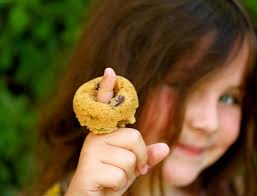
Do not Drop the Donut:  Place your finger through the hole in a donut and have your child see how much of the donut s/he can eat before the donut falls.

There are many other games that have the added bonus of building attachment and I’ve listed just a few.  I’m sure that you can even make up some of your own.

Do you have any games that you would like to share with the rest of this parent community?  Feel free to post them!

Teens and Attachment

Sometimes our teen’s behaviour looks very little like an attachment behaviour and at those time we wonder if we really want to be any closer to them!!  They are belligerent, mouthy, sassy, rude and foul tempered.  Is this really all about hormones?  I think not.

Teens and toddlers have a lot in common; they are both trying to identify themselves and become independent.  Remember when your toddler used to play in a room away from you?   S/he would come back to the room that you were in and check to make sure you were still there.   Your child was actually trying out independence by being apart from you and then coming back when s/he needed reassurance.  A teen is doing the exact same thing by pushing you away when s/he wants independence and then reconnecting for reassurance, comforting or acknowledgement.  An elastic band best describes this attachment and separation process for an adolescent.

Developmentally, teens are in the process of learning to live independent of their parents.    Our role as parents is to encourage and support our children while they are doing this.  We encourage good decisions and choices that we see them making; “You were really taking care of yourself when you decided not to go to that party the other night – the one that got out of control.”  We also guide and help with problem solving; “I see that its’t working out for you.  Would you like us to look at this and see if together we can come up with some solutions for you?”  If they say, “No.” then reply with, “I’m here if you change your mind.”

A good book on talking to teens: How to Talk so Teens Will Listen and How to Listen so Teens Will Talk  by Elaine Mazlish and Adele Faber

Teaching Young Children About Empathy

“To see with the eyes of another, to hear with the ears of another and to feel with the heart of another.” (Alfred Adler) is a wonderful way to describe empathy.  It is a complex idea that preschoolers are not yet able to grasp, so how do parents teach their young children about empathy?

Children are great life scientists – they are constantly exploring their environments: discovering, observing and trying things.  They watch and copy the behaviours of others, so if parents show empathy, young children will mimic.  Everyday situations, as they arise, can be teachable moments: talking about the lost puppy and how scared/lonely he must be, about how the owner of this puppy must be worried/sad or about the homeless person they passed on the street.

Here are some ways that you can teach empathy to your preschoolers:

Stories are a great springboard for teaching empathy.  The story opens up the    opportunity to discuss the point of view of the character eg. “If you were the little boy/girl in the story how would you feel or what would you do?”

  • Relate the story to the child’s real life experience. “Do you remember when this happened to you and how did you feel?”
  • Perhaps it can be related to something that happened to a friend or sibling.
  • Or simply identifying the character’s feelings by looking at the facial expressions and/or body language.

Help children become aware of their own feelings: how their bodies feel (ie. where there might be tension, “I notice that you make fists when you’re mad), their facial expressions and body language.  This helps then identify it in others.

Have them care for something, like a plant or an animal.

Have fun with it: Role-play situations or play games where they have to guess what you’re feeling.

Respond with empathy: When children express disappointment, anger, sorrow or joy respond with empathy.  “You’re really disappointed that you couldn’t go to the park today. I know that you were really looking forward to it.”  Or  “Boy, you’re really excited about going to the birthday party!” (An empathic statement does not require a parent to do anything other than identify the feeling. Parents don’t need to “fix” it.)

Children are little sponges.  They soak up everything you say and do.  Everyone who is in contact with children, not just parents, has the potential to model empathy.  As parents you are your children’s first teachers and your children look to you for that guidance.

As published in the Preschool online newsletter The Shorty List

Mealtime Fun!

Has your dinner time become predictable… routine… boring?  Once in a while it may be fun to change things up a bit and have a weekend dinner that is out of the ordinary.  Here are a few suggestions for some creative mealtime experiences that involve more than pizza.

1. Backward Night:  This is the night when you eat dessert first.  Maybe you also come to the table wearing your clothes backwards.

2. Power Outage Night:  After preparing dinner, go and flip the breaker so that the power goes out.  Light candles and pretend that there is a power failure.

3. Neanderthal Night:  This is a messy meal.  No one uses utensils!

The family can all be involved in planning and preparing this meal.  It can be a lot of fun deciding what Neanderthal people might have eaten and prepare this i.e. drumsticks, chicken wings etc.

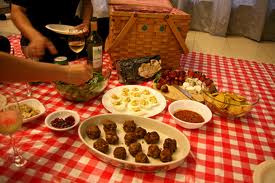
4. Indoor Picnic:  Spread out a blanket on the floor of the living room or family room and have your indoor picnic.

Please feel free to share any of your creative ideas.  More to follow……

Bon appétit!

Positive Time Out

Parents have been using time outs as a consequence for their kids’ behaviours for a while now.  The way that they’ve been used can sometimes come across as a disguised punishment.  We tell kids to go to time out to think about their behaviour and we try to make sure that time out is not pleasant either.  Kids can go to their room but they can’t read or play while they are there because, “It should not be fun!”

So let’s rewind!    

Let’s look at time out from a different perspective or as a positive time out.  A positive time out (PTO) is used as a cooling off period and is presented to out kids in a much different way.  It allows the child to learn to self-soothe and regulate his/her own emotions.  It allows for calming down before a new behaviour is possible.  Here’s the “recipe” for PTO.

– Talk to your child about how we all need cooling off periods when we our emotions and behaviour start to get out of control.  Tell your child what you do to cool off before you “lose it”.  Do you walk away and go sit in your room, or the bathroom and take 5 minutes to regain your composure? … Or is knitting your release?……Or…….

– Explain to your child that once emotions get too “BIG” we can’t carry them anymore and then we usually can’t think or act in a positive way any longer.  So a PTO will help us.

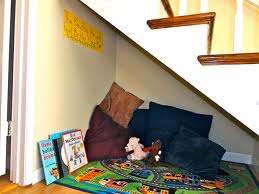
– Brainstorm with your child where they might like to go for their cooling off period.  It might be their bedroom, the cozy corner in the family room or a little alcove tucked under the stairs.  Ask them what they might like to have in this area that would help them cool off.  Books?  A favourite pillow or stuffy?  A comfy blanket?  Then help them to create this area for themselves.

So next time you see a temper tantrum starting to boil you calmly say to your child, “Would it be helpful for you to have a PTO now?”  If the PTO place is a place that they have created and have made cozy they are more that likely to want to go there. BUT remember not to use this as a punishment.

After a certain amount to time you and can go back into your child’s PTO area and ask, “Are you ready to talk about what happened and about what we can do next time?”  If you get a negative response or none just say, “I see you’re not ready to talk so come and find me when you are.”  Once everyone has calmed down, then some constructive problem solving can start to take place.  Children and adults do better when they feel better.

If your child refuses to go to his/her time out place then you say, “Well I need a time out.” and you go for a time out and return when you have calmed down.  (Of course, you are not leaving your child unattended at this time but you might go to your bedroom for a few minutes or walk around the house or go up and down the stairs a few times.) You’re modelling emotional regulation for your child.  Do not think that you are letting your child GET AWAY WITH IT!!!  You are NOT!  You are letting things calm down before addressing the issue.

Why you ask?  Well as Jane Nelsen jokingly puts it: “”When children push your buttons, you react from your reptilian brain, and reptiles eat their young.”  We all need to be in our adult brains, not our reptilian brains.  See the post on Anger to  learn about the cycle of anger.

NOTE: Young children under the age of about 2 1/2 do not understand the concept of time out and it should not be used with them.  You may want instead to ask, “Do you want to sit here with your blanket/teddy/pillow for a while?”


Get creative!!  The more kids put into their space, the more they’ll want to use it!

Mistakes

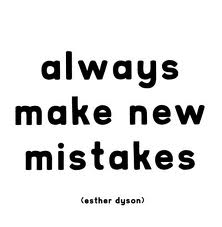
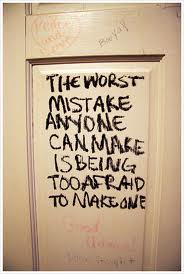
It’s 2012, a new year, a new start and many good intentions.  If I can suggest one resolution for all families to make this year it would be this: Make this the year when you truly embrace the saying “Mistakes are for learning.”  Model this for your children by saying, “Oh, I did this wrong.  Let’s see if I can figure out how to do it.”  Don’t berate yourself for making a mistake, take it in stride.  Show that mistakes mean that you are on your way to learning something new.

The outcome for your child is that he may start to let go of the need to always do it right and will start to be able to accept that mistakes are a normal process.  This releases your child of the huge burden of thinking that anything that’s not always right is not good enough.  So when your child is upset with him/herself because s/he made a mistake just say, “I see you’re upset that you didn’t get this all right.  You would really like to be able to do it better.”  You’re acknowledging the feelings without any judgement that making mistakes is not okay.

This leads to a more self-confident child, one who accepts him/herself for who s/he is.  Thomas Edison said “I have not failed.  I have just found 10,000 ways that won’t work.”  Thanks for that Thomas!

T’is the Season!

The holiday season is a time when families, relatives and friends gather to celebrate together, some from different parts of the world.  It can be an exhausting time as you try to fit it all into your already hectic schedule.

Ten tips for keeping your sanity during the holiday season:

  1. P, P and P.  Prepare, plan ahead and pace yourself.
  2. Keep plans simple: one or two activities per week.  It’s about QUALITY NOT QUANTITY. Make a family “downtime” part of the plans.  This might be the time to watch a holiday movie at home.
  3. Include everyone in the preparations and planning of activities.  Use family meetings as a way of enlisting everyone’s help, yes, even your pre-schooler’s.
  4. Stick to the regular routine as much as possible i.e. nap times, meal times, etc.
  5. Keep the little ones nourished to avoid meltdowns.  We often get so caught up in what we’re doing that we overlook meals and snacks.  Keep snacks healthy as the season provides lots of other opportunities for treats.
  6. Having out-of-town guests?  Have kids decide who will have to give up their room to the guest (if you don’t have a guest room) and have the kids get the guest room ready (tidy, put out towels, strip the bed, etc.).
  7. Get out of the house.  Go for walking tours together to see decorated houses or store fronts or take in some free events in the neighbourhood or the city.
  8. Gift giving:  Keep it simple (tip #2, QUALITY NOT QUANTITY).  Model the gift of giving to those less fortunate than us: Look online or in the local newspaper to find a charitable organization that the family decides to contribute to (Xmas hamper, food bank, toy drives etc.).
  9. Accept a less than perfect contribution from your pre-schooler – remember you are creating memories not competing for a spot in the Martha Stewart magazine!
  10. Take care of yourself!  Hire a babysitter, for some downtime, even if it’s just to go to the local coffee shop, alone or with your partner.
  11. One last one: ENJOY and Happy Holidays! 

PARENTING WITHOUT TRAINING WHEELS as seen in BC Parent Magazine

Remember when you first rode your bike without training wheels? You were taught, you practiced, you watched others, you fell down and brushed yourself off but eventually you         did it.  You were wobbly at first, but with practice, it became second nature.

 The principle of practice makes perfect is just as true for parents as it is for beginning bikers.  Most parents come with parenting “training wheels:” our innate ability to care for a child’s basic needs.  But what about when the four-year-old stomps his foot and shouts “NO!” when it’s time to leave the park, or when you constantly have to remind the older child to pick up her toys, or when the teen breaks curfew?  Where does that fine parenting balance between kindness (which shows respect for the child) and firmness (which shows respect for ourselves) lie?  How can a parent learn to go on without their training wheels?

Attending parenting groups are a great way to learn to lose those extra wheels. They provide consistent information and step-by-step guidance for parents wanting to learn more effective ways of raising responsible, respectful, independent children.  Participating in these groups not only acknowledges the skills parents already possess, but provides them with additional parenting tools.  These tools include: understanding the child’s temperament, personality and behaviour, using encouragement instead of praise, effective communication, how and when to use consequences and so on.

Equally valuable is the experience of meeting and connecting with other parents who face similar challenges.  Where better to talk about your six-year-old’s bedtime struggles than with a group of parents who’re going through the same thing? Facilitated by trained, experienced parenting educators, parenting classes provide non-judgmental, inclusive group settings that offer not only education, but solidarity, too.  In response to the question “What was especially helpful or meaningful to you?” One course evaluation given out at the end of a parenting series found that what the majority of parents found most ‘helpful or meaningful’ was this opportunity for talking with other parents with similar challenges.

Each class in a series is designed to address specific topics: language of encouragement, communication, goals of behaviour, routines/chores, consequences, sibling rivalry and more.   The facilitators send parents home at the end of each class with new tools to use and try out. When parents return the following week, they can share their successes or challenges with other parents in the group. As they gain new tools each week, parents often notice how the increase in the number of tools actually makes the job easier, rather than more overwhelming!   After the first week of one series, a father of a ten-year old told the class that after learning about temperament and personality and how they relate to behaviour, he recognized how similar his and his daughter’s temperaments were. “We both dig our heels in when we’re feeling upset.  I’m less quick to anger when she has her stubborn moments now; I know what it feels like.”  During the opening exercise in week three, a single mother told the group how intrigued her seven-year-old daughter appeared to be by the changes in this mother’s approach toward her.  “I don’t know what you’re learning at those classes,” said the seven-year-old, “but you’re different.  We don’t fight now.”  Another mother shared a tale of newfound parenting and culinary success: “When my 12 year-old son asked me if he could bake cookies for his class, I cringed at first.  I could see it all now!  My kitchen would never be the same.  I took a deep breath and told my son that I had confidence in him to bake cookies on his own and to also put the kitchen back as he found it.  To my surprise and delight he succeeded in both tasks and I didn’t have to remind him at all!”  These parents’ experiences show that by taking parenting classes and learning new, efficient ways of dealing with children and their behaviours, children flourish.  The more parents practice and refine their skills, the more confidently they can set reasonable boundaries and limits, and the more effective they can be at encouraging their children to be responsible, respectful, independent and contributing members of the family. These courses are an investment into one of the most important things in our lives: our children.  Why stay dependent on only the training wheels?  Venture out on two wheels, refine your skills and feel the excitement and joy of navigating the road with confidence and ease.  Feel the wind in your hair!  Experience the joy in parenting!


A Is For Anger or Anxiety

Let’s talk a bit about the cycle of anger or anxiety because both react in much the same way.  The way I think about the reaction of these emotions is on an increasing scale of o to 10, with 10 being full blown anxiety or anger (rage).  Once it gets to this point there is no use in trying to have any conversation with your child, or anyone else for that matter.  They cannot process anything as they are operating at this point from a very primitive place in their brain (flight or fight).  Once a level 10 has been reached, it takes about 45 minutes for the whole system to calm down and get back down to a 0.

Look at the “A” below and notice that between 1 and 2 there is a “crossing” to get from one side of the “A” to the other.  If we can catch our anger/anxiety at this point, we can walk across this crossing or bridge to get to the other side and from here it is a short distance back to 0.  This is why it is important to recognize the signs in our bodies that tell us that we are getting mad or that our anxiety is rising.  We feel many of the same sensations in our bodies, clenching and tightening, butterflies in our stomachs, feeling hot or cold, energy in our legs (to flee or to fight).  With anxiety we may also feel a shortness of breath, our hearts racing, a tightness in our chests and/or sweaty palms.

If we can recognize these signs within our bodies, then we can take action before our level reaches 2.  There are a few suggestions listed on the “A” which allow us to then walk across the bridge and stop the anger/anxiety from reaching a 10 and then having a long, long way back.  Also to note is that it is a very quick climb to 10 once we’ve hit the 2.

So, teach your children how to notice the signs in their bodies and what to do when they start so that they can take control of these emotions and keep them at a level where they are still useful energy.

See the article Angrrrrr! for more information about anger.