Surviving Your Child’s “Terrific Twos”

Yes, you read correctly, this is the terrific twos, not the terrible twos. This is a terrific time as your two year-old if gaining independence, is learning how to be a person separate from you. Your two year-old is testing their wings and seeing what they can do ALL ON THEIR OWN! They are gaining their own voice! Isn’t this terrific!! You are watching your two year-old’s personality take shape right before your eyes; your little butterfly is emerging!

As terrific as this stage is, it is not an easy stage, so here are some survival tips.

  1. OFFER CHOICES. Your two year-old is wanting to feel the power and control that they are gaining over their world. Give them this power in appropriate places by letting them make choices, “Do you want to have your story before bath time or after bath time?” “Do you want to wear your red dress or your blue dress?” Do not give choices like “Do you want to watch TV or have a nap?” A good rule of thumb is to give a choice when you can live with whatever the answer is.
  2. GIVE THEM RESPONSIBILITIES. Two year-olds love to be helpers. They love to get jobs to do. It makes them feel powerful and also shows them that their contribution in the family is valuable. Give them the job of putting the napkins out at dinner time at each place setting. This is also getting them to do some pre-math skills – one to one correspondence.
  3. ENCOURAGE. Encourage all positive behaviour that your child displays. Encouragement is specific and sincere. “Thank you for helping me set the table. That was a big help!” “Good job!” on it’s own is not encouragement as it is not specific. Being specific is an important part of encouragement. Beware: Do not encourage behaviour that you do not want repeated  – “Wow! That was a really loud yell.” – will only lead to way more of those yells!
  4. CORRECT, CORRECT, CORRECT. You are constantly having to correct your two year-old’s behaviour. They are not able to understand consequences yet as they have not reached the age of reason. This means “Sand is not for throwing, you may put sand in the dump truck.” If your child continues to throw sand, you will have to take your child out of the sandbox for a bit and then try again. If it repeats, it is time to go home. They are constantly testing limits and you are constantly correcting and setting limits.
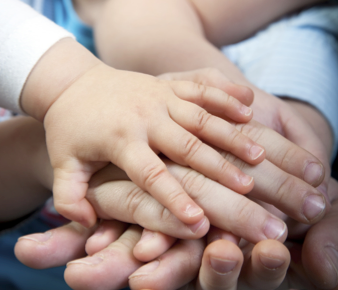
  5. CONNECTION BEFORE CORRECTION. It is important to connect with your child before correcting a behaviour. Connecting as in the above example or throwing sand may be as simple as putting your hand on your child’s shoulder while making the statement or if a child is biting you may say, “I love you but I don’t like the biting.”
    connection

    connection

  6. SLEEP. Make sure that your two year-old gets enough sleep, including naps. Most two year-olds still need naps at this age. Keep sleep routines regular.
  7. FOOD. Make sure that your two year-old is getting enough to eat. This means snacks during the day. Some two year-olds are grazers so make sure that there are always healthy snacks out for your child to eat. Low blood sugar will lead to moodiness and irritability.
  8. IGNORE. Ignore negative behaviours after you have taught the correct behaviour and encourage positive ones. If your child continually eats with their hands when you know they know how to eat with utensils, ignore the behaviour as it may be a way of getting negative attention. Wait until they eat with utensils to encourage this with an encouraging statement or use encouragement on another person at the table who is using utensils. “Way to go Daddy! You are using your fork to eat!” Watch how quickly your two year-old picks up their utensils!
  9. CONNECT. Connect with other parents and build a network. Join a group if you aren’t already part of one. Get to know parents with two year-olds so that you can arrange play dates as well as see that other parents are having the same struggles as you are.
  10. STAY COOL. This is easier said than done but do try to stay calm and be patient. Do lots of counting to 10 and breathing! These little people are learning so much and depend on you to teach them. This is draining so take care of yourself so that you can be the best parent to your little one. Make sure you get a chance to recharge your batteries.
  11. ATTEND PARENTING CLASSES. Taking a parenting class is a great way to meet other parents and share struggles as you hone your parenting skills. Parenting classes are invaluable.

    Help! My Kid Didn't Come With an Owner's Manual.

    Help! My Kid Didn’t Come With an Owner’s Manual.
It is amazing how quickly these years pass and remember that this too shall pass. Keep reminding yourself that there is light at the end of the tunnel. Keep smiling!
Milestones

For our children, reaching a milestone is like stepping up one more rung onto that ladder of being grown up.  For parents, when our kids reach these milestones they are bittersweet moments.  We are glad to see our children gaining all these new skills like learning to walk, talk, use the potty, etc.  These are all steps toward independence and we encourage them every step of the way.  On the other hand, we are saddened somewhat to see that our babies are growing up.

I reveled, clapped and cheered when my kids crawled, gave up their bottles, learned to read and such.  I was their greatest supporter and fan.  It was not too hard for me to admit that they were growing when they reached these milestones.  I was enjoying each new stage of development and just when I thought that they were at the best stage possible, they moved into another one.  Then this became the best stage possible!

The milestones that I most regretted them reaching were when they no longer said “lallow” for yellow or “num-mi-na” for food.  I still long to hear “oom-ba-wa” for bottle or that male cows are “bullies”.  New words were replaced daily: “prettyful” became beautiful,  “gorilla bars” were replaced by granola bars, “buckets” were no longer male goats (bucks)  and we no longer needed to remember to renew our “remembership” to the aquarium.

Ahhh, childhood.  I goes by so quickly.  As trying as some moments are (and there are many trying moments) our children do grow up overnight.  Those moments sail by so enjoy every day.  Each day is precious as we are making “rememories!”  Go hug your kid!  I just hugged mine.

What about toilet training?

The typical questions from parents with regards to toilet training is, “When can I expect my child to be toilet trained?”  My typical response is, “When he/she is ready.”  I know that their are parents who toilet trained their children early but the bottom line is this – children have total control of only two things: what goes into their bodies and what comes out.   There is no set time when a child SHOULD be toilet trained as each child is unique and different but I can almost guarantee that your child will be toilet trained by the time he/she goes to university!

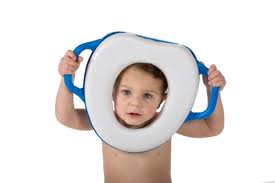
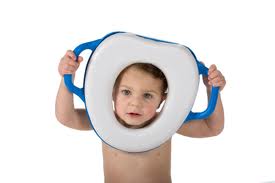
So, how does one encourage one’s child to use the toilet rather than their diapers?Introduce a potty into your home once you think your child will be able to understand what it is for.  I used to remove my children’s diapers and ask them if they wanted to sit on the potty and read a book.  If they made a “deposit” in the potty, I would get really excited and say “Way to go, you went _____ in the potty, just like mommy and daddy go on the toilet!” They would be feeling pretty pleased with themselves after this.  If they didn’t use the potty while sitting on it, that was okay too.  I would let them get off whenever they felt that they had had enough.  I would repeat this exercise several times a day, but I never forced them to sit on the potty.  I used to ask them if they wanted to try the potty again and usually once they had one success, they always wanted more. Of course, I also got a couple of toilet training books that I would read to them as a way of teaching about toilet training. Later I graduated them to a training toilet seat and a step for them to get themselves onto the toilet.  My first child toilet trained herself just after her second birthday but was not dry at night for years. (Thank goodness for pull ups.)  My second child wasn’t toilet trained till three but was dry at night very soon after. Each was very different.  So different that my second used to take the training toilet seat and put it on backward on the toilet and do her business this way. Whatever works!

Encouragement and sports

I heard someone from the BC Soccer Association speaking on the radio about how they are wanting to put less emphasis on score keeping and more emphasis on skill building. They are suggesting that scores not be kept in soccer games until the players are about 14 years old.

Initially I thought, “Well, if you can’t have competition on the soccer field, then where can you have it”? until I thought about this more. YES! I get it. If we want to encourage the process, then let’s not keep score.  The pressure would be off the kids and the coaches to perform and I think we’d see much improved soccer skills and sportsmanship. We would be modelling to the kids the idea of playing well, building skills and having fun!! Isn’t this why we put our kids in soccer in the first place? I like this idea!!! You?

Children need encouragement like a plant needs water. Rudolph Dreikurs

Encourage, encourage, encourage, the best way to bring out the best in your kid. Encourage the process, not the result. Not “Wow, you got the winning goal, good for you!” rather “How did it feel to get the ball, and work your way through all those players in order to score that winning goal!” or “You studied really hard for that test, your hard work paid off!” Other encouraging statements might be “Thanks for your help. I appreciate it”! “I noticed that you set the table without being asked. Thanks for taking your responsibility seriously”! Or “Way to go’! instead of “Good job”! Avoid those judgement words, good, bad, and all of their forms.

At first it does seem unnatural but in time, it just becomes part of your everyday language. CAUTION! You can overdo it. Do not encourage every single thing – use your judgement. I have heard parents use an encouraging statement for every single thing that their kid did almost to the point of, “Way to go, you put your left foot in front of your right etc.”! BE SINCERE!!! Kids can see right through you if you are not and your attempts at encouragement will actually be discouraging.

Believe in them and let them know it. “I know you can do …..” NOT “It’s easy, everyone can do this”! “I’ve seen you do …..in the past so I know that you can find a way to do ….. If you need help I’m always here”, but help, don’t take over.

Encouragement builds self-esteem and confidence. It empowers your kids and teaches them that they are responsible for their actions. It helps to build a cooperative relationship with other family members and shows the kids that they are valued and respected.

Suggested reading “Positive Discipline” by Jane Nelson and “How to Talk so Kids Listen and How to Listen so Kids Will Talk” by Adele Faber